
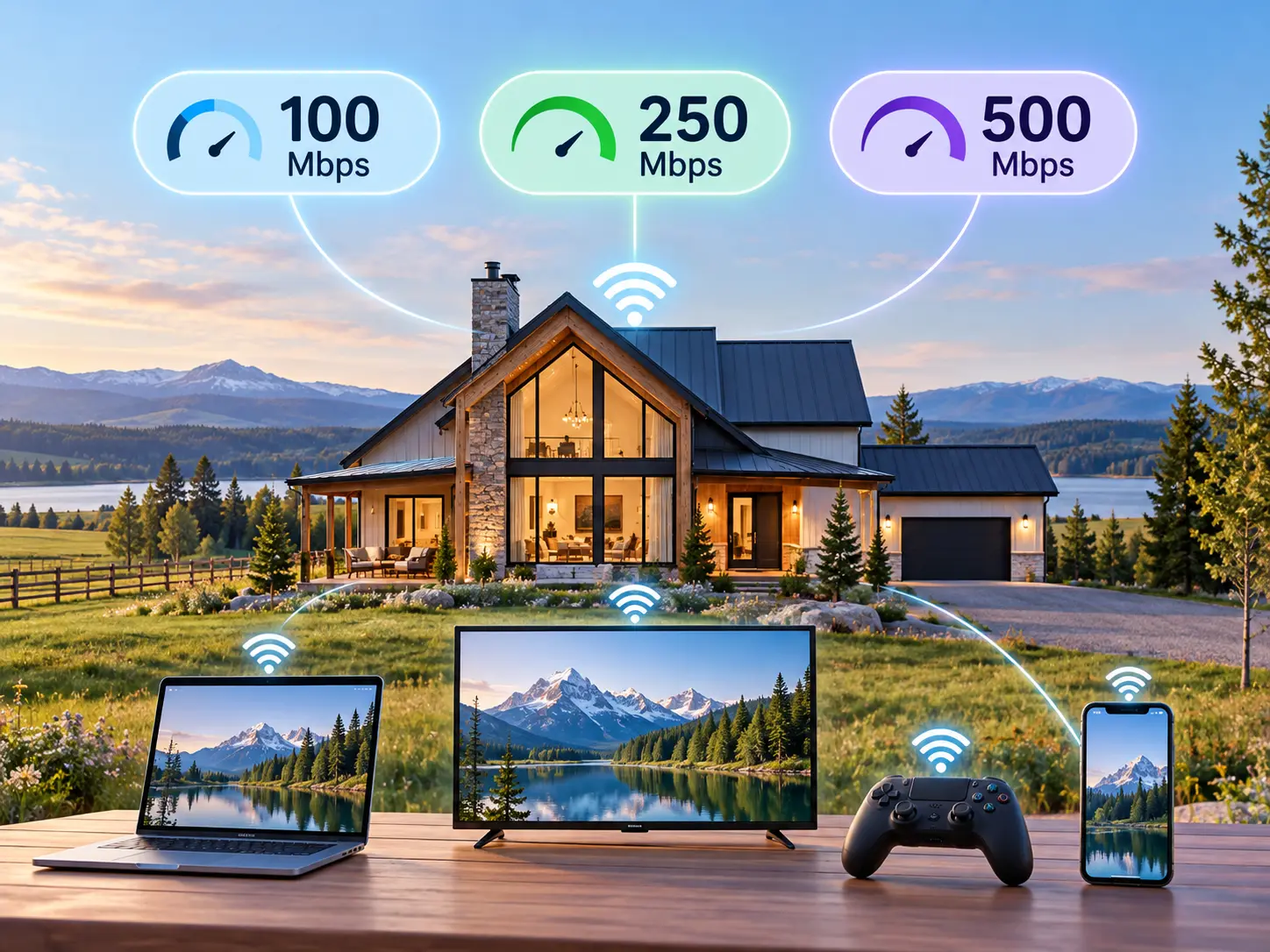
When shopping for internet, you’ve probably seen numbers like 50 Mbps, 100 Mbps, 250 Mbps, or even 500 Mbps.
But what do those numbers actually mean?
And how do you know which speed is right for your household?
Internet speed can sound complicated, but understanding a few basics can make comparing plans much easier.
What Is Mbps?
Mbps stands for megabits per second.
It’s a measurement of how much data your internet connection can transfer each second.
Generally speaking, a higher Mbps number means your connection has the capacity to transfer more data in the same amount of time.
But that doesn’t necessarily mean everyone needs the fastest available plan.
The right speed depends on how your household uses the internet.
Download Speed vs. Upload Speed
When comparing internet plans, you’ll often see two types of speeds.
Download speed refers to how quickly information travels from the internet to your device.
It’s important for activities like:
Streaming movies and television
Browsing websites
Downloading files
Watching online videos
Receiving game updates
Upload speed refers to how quickly information travels from your device to the internet.
This matters for:
Video meetings
Sending large files
Uploading photos and videos
Cloud backups
Sharing content online
Both can affect your experience, depending on what you’re doing.
How Much Internet Speed Do You Really Need?
Every household is different.
A person who mainly checks email, browses websites, and occasionally streams video will have different requirements than a family with several people online at once.
For example:
A smaller household: Basic browsing, email, and occasional streaming may not require the highest available speeds.
A busy family: Multiple TVs, laptops, gaming systems, and phones may benefit from more bandwidth.
A work-from-home household: Video calls, cloud applications, and file transfers can make both download and upload performance important.
The key is thinking about how many people are using the connection simultaneously.
Does Faster Internet Mean Better Wi-Fi?
Not necessarily.
This is an important distinction.
Your internet plan determines the service delivered to your home, while your Wi-Fi network distributes that connection to your devices.
If your router is poorly positioned or your Wi-Fi doesn’t reach certain rooms, upgrading your internet plan may not solve those coverage problems.
What About Gaming?
Many people assume online gaming always requires extremely high internet speeds.
But gaming performance also depends on latency, network stability, and how much other activity is happening on the connection.
Large game downloads benefit from faster download speeds, while responsive online gameplay depends on more than Mbps alone.
Rural Internet Speeds Are Changing
Rural internet has evolved considerably.
Depending on their address and available network technology, some rural Canadian households can now access speeds that weren’t available in their communities several years ago.
Xplore offers different internet technologies and plans in eligible service areas, including fibre and fixed wireless options.
The speeds available will depend on your location and the service offered at your address.
Choose a Speed That Fits Your Life
The biggest number isn’t automatically the best choice for every household.
Understanding Mbps, upload speeds, download speeds, and your household’s actual usage can help you make a more informed decision.
If you haven’t reviewed your internet options recently, it may be worth checking what’s available at your address.
Because the right internet connection should fit the way you live.
.


